October 05, 2026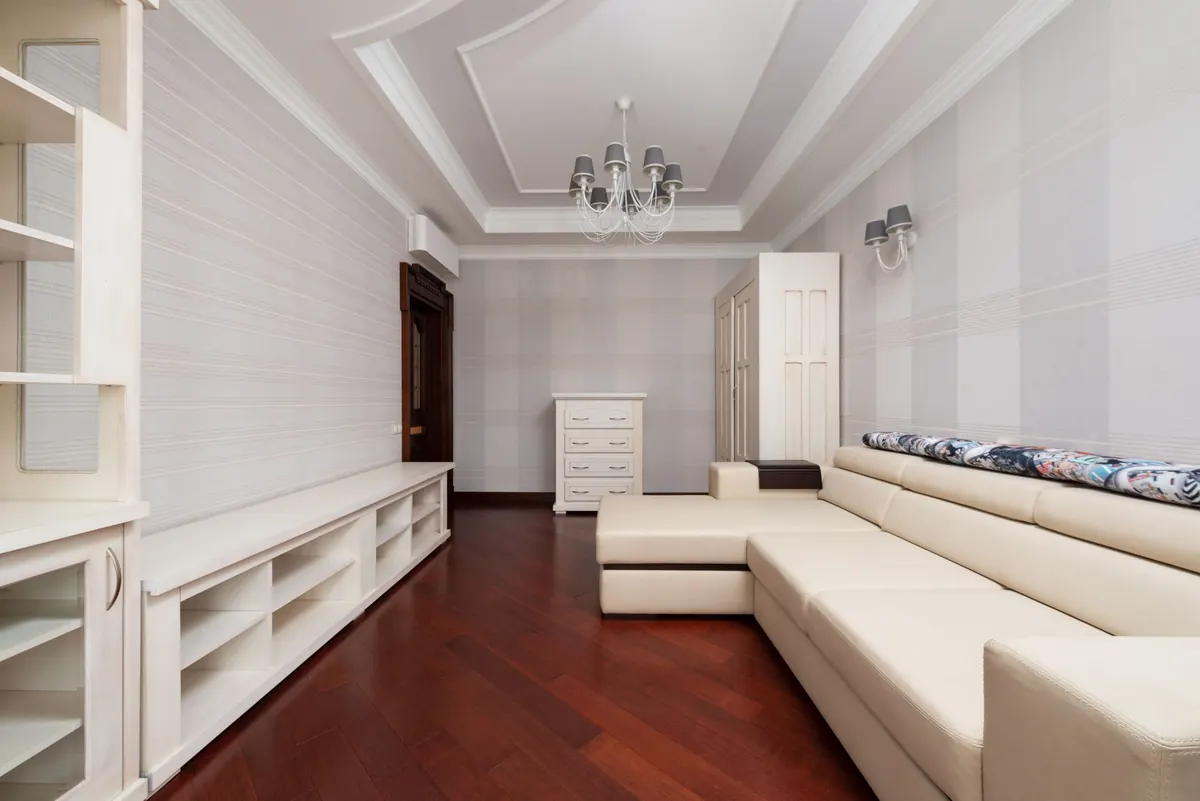
A sofa is one piece of furniture. A sectional is a commitment to a shape. That difference matters more than any trend, because the wrong pick doesn't just look off — it can block a doorway, slice a room in half, or leave you with a corner seat nobody ever uses. The good news is that the decision usually comes down to three things you already know about your home: how much floor space you have, how you actually sit, and whether you're willing to live with one arrangement for the next decade.
Start With the Room, Not the Sofa
Before you look at a single fabric swatch, spend twenty minutes with a tape measure. Write down the length of every wall that could hold seating, then mark the openings: doorways, archways, sliding doors, radiators, floor vents, and the walking path people take from one side of the room to the other. Sectionals fail most often in rooms with doors on two or three sides, because there's simply no long run of wall to push them against.
Next, tape the footprint on the floor. Painter's tape is the cheapest design tool you own, and a 100-inch rectangle in blue tape will tell you more than any showroom ever could. Walk around it. Sit inside it. Try to open the closet behind it.
Two measurements are worth remembering. Main walkways feel comfortable at roughly 30 to 36 inches of clear space. Between the front edge of the seating and a coffee table, about 16 to 18 inches gives most adults room to sit down without barking a shin. If your tape outline leaves less than that, the piece is too big, whatever the label claims.
The delivery problem
Measure the route in, not just the room. Doorways, hallway turns, stairwell bends, and elevator interiors have ended more sofa purchases than bad taste ever has. Sectionals are often delivered in two or three pieces, which helps, but a single-piece chaise section still has to make the final turn. Ask the retailer for the dimensions of each boxed piece, not just the assembled sofa.
How You Actually Live in the Room
Think about a normal Tuesday, not a holiday party. If you sprawl sideways with a laptop and a dog, a chaise or a deep corner seat will earn its keep every night. If your living room is mostly a place for coffee with one other person and a glass of wine, a standard sofa plus two well-chosen chairs will serve you better and look more considered.
Households with young children tend to do well with sectionals, because the corner creates a natural play boundary and there are fewer gaps for toys to vanish into. Renters, frequent movers, and anyone who rearranges furniture twice a year should lean toward a sofa. It's easier to move, easier to sell, and easier to pair with whatever the next apartment offers.
The Case for a Standard Sofa
A sofa is flexible in a way a sectional isn't. You can float it in the middle of a room, angle it toward a fireplace, or swap it to the opposite wall when you repaint. Add a pair of armchairs and you get conversation seating that faces inward instead of everyone staring the same direction at a screen.
Sofas also tend to cost less for the same quality, come in far more styles and lengths, and are simpler to slipcover or reupholster down the road. In narrow rooms — say, anything under about 11 feet wide — a sofa is usually the only option that leaves a walkway on both sides.
The trade-off is seating capacity. A 90-inch sofa seats three comfortably. If you regularly host six people, you'll need chairs to make up the difference, and chairs take up floor space of their own.
The Case for a Sectional
Sectionals win on seats per square foot. An L-shaped sectional tucks into a corner and uses space that a sofa and two chairs would waste, which is why they're so common in open-plan living areas. They also do quiet work as a room divider: the back of the sofa becomes a soft border between the living zone and the dining zone without adding a wall.
The honest downsides:
- One layout, forever. A left-facing chaise can't become a right-facing one without buying new pieces.
- Weight and bulk. Even modular versions are heavy, and the corner piece is often awkward to carry.
- Visual mass. A large sectional can make a small room feel packed, especially in dark, heavy fabrics with high backs.
- Resale friction. Sectionals fit fewer homes than standard sofas, so they're harder to pass on.
Match the Shape to Your Room
L-shaped sectionals
Best against one long wall with a return along a shorter wall, or floating with the chaise as a divider. Keep at least one open side so the room doesn't feel boxed in.
U-shaped sectionals
Great for dedicated family rooms and media spaces where everyone faces the same direction. They need a generous room — figure on at least 12 feet in both directions — and they can feel like a pen in anything smaller.
Chaise vs. standard corner
A chaise gives you one luxurious lounging spot but blocks the floor in front of it. A standard corner seat keeps the footprint rectangular and is friendlier to small rooms and to guests who don't want to recline.
Modular pieces
If you love the sectional look but hate the permanence, modular seating gives you both: rearrange it for parties, split it into two sofas when you move. It costs more and the seams are visible, but for many households it's the smart compromise.
Small Rooms and Awkward Rooms
In a compact living room, choose the smallest piece that seats the number of people you host most weeks — not the number you host once a year. A 72- to 80-inch sofa with a slim arm, legs that show floor beneath, and a light or mid-tone fabric will read as far less furniture than a boxy sectional with a skirted base.
Corner fireplaces, bay windows, and rooms with a single long wall all complicate sectionals. When in doubt, sketch the room on graph paper at a quarter-inch scale and cut paper shapes for the furniture. Moving paper is free; moving a sectional is not.
A Simple Way to Decide
- Measure the room and tape the footprint of your ideal size.
- Count how many people sit in the room on a typical evening.
- Check the delivery route, including turns and stairwells.
- Ask whether you'd be happy with the same arrangement in three years.
- Choose a sofa if flexibility, price, or a small room matters most; choose a sectional if seating capacity and a defined corner matter most.
Either way, buy the size that fits the room you have rather than the room you hope to have someday. A sofa that's 8 inches too long will bother you every single day; a sectional that seats one fewer person than you imagined will rarely come up.
Photo: Max Vakhtbovych / Pexels